Blog Archives - Page 24 of 40 - Amazing Journeys
Wanderlust Blog Wanderlust Blog

Here at Amazing Journeys, we’re lucky have the best jobs in the world—and we think our good fortune is worth sharing. So, when your next journey seems like a distant dream, take a few minutes to explore our WANDERLUST blog—it’s chock full of engaging tales and helpful tips from our travels around the world. Check out the most recent entry (at the top) or search by your preferred criteria. Consider it motivation for your next embarkation.

Border

Costa Rica-No Artificial Ingredients

Thursday, February 17th, 2011

If your idea of an ideal vacation is to enjoy a pairing of lovely tropical beaches, the grandest adventures, the wonders of nature, and a scintillating culture, Costa Rica is a place where dreams can be made. No wonder, then, that thousands of tourists have made Costa Rica their top travel choice.

Costa Rica occupies a privileged spot in the heart of Central America. While its territory of 19,652 square miles touches both the Atlantic and Pacific oceans, the country is surprisingly accessible – just a 3 hour flight from Atlanta. Its borders are protected by the US military and its inland protective services are protected by a respected and reputable police force.  Costa is not only beautiful, its smart.

Just what the every Jewish single is looking for!

A little bit of knowledge about this country is interesting…however a personal experience of this country will drop your jaw with anticipation, excitement, adventure and relaxation.  All rolled into one!

Intersecting beaches and forests

Costa Rica’s beaches are surrounded by forests, and have great natural diversity and a variety of aquatic ecosystems with beautiful white and black sand beaches, ideal for sport fishing, snorkeling, and sun bathing.   In this small area of firm land, there are 762 miles of coastlines, distributed on the Pacific and the Caribbean. Costa Rican beaches allow you to sun-tan while having the additional bonus of being part of a complex pro-nature system known as the Ecological Blue Flag Award recognizing Costa Rica’s commitment with sustainability and environmental protection.

Plants and animals everywhere

Costa Rica´s territory is so small that it encompasses only 0.03% of the planet´s surface but is within the top 20 richest countries in biodiversity on Earth in terms of species density. It is possible to find more species in 1,000 sq.miles in Costa Rica that in the same area in countries like Brazil or Colombia. Costa Rica has nearly half a million species, representing 4% of the planet´s expected biodiversity. Are you ready to discover it?

Costa Rica´s Marvels of Fire

As part of the Pacific Ring of Fire, Costa Rica´s volcanoes are among the most mesmerizing in the world. In fact, the present-day landmass known as Costa Rica is the result of complex volcanic activity that took place some 75 million years ago and still continues today.

Counting every location or crater where an eruption has occurred within its borders, Costa Rica volcanoes boast a stunning 112 sites throughout the country. Most Costa Rica volcanoes and their surrounding areas have been made into national parks.

One of them is Arenal Volcano, listed among the 10 most active volcanoes in the world and for a good reason: It regularly puts on a spectacle, showing off with strong rumbling sounds and occasional rock avalanches, as well as smoke, ash and lava eruptions that descend its slope at speeds reaching 70 kilometers per hour and temperatures reaching 1,000 degrees Celsius.

The mountain and surrounding area were declared a national park in 1994. Thermal hot springs are now the area’s main attraction, most of which boast nearby trails and numerous lookout points.  And yes, one of the highlights of the upcoming Amazing Journey for Jewish singles in their 30s, 40s & 50s is a three night stay at the Tabacon Resort at the base of the Arenal Volcano.  To say it’s a highlight, is an understatement

The Biggest Rainforest in Costa Rica

La Amistad International Park (PILA) is the biggest natural park in Costa Rica covering a great variety of humid, rain and cloud forests in the Pacific and Atlantic sides, as well as indigenous reserves.

The Talamanca region, a big portion of the park, was a refuge in colonial times for indigenous people who were resilient from the Spanish colonizers’ repression. 
The enormous cultural richness and extraordinary natural habitats, result of different altitudes, soil and microclimates, was the reason why the park was also designed Biosphere Reserve and World Heritage Site.

Species in great danger of extinction such as the jaguar, the largest feline in the Americas and third largest world-wide, live in the park as well as a great variety of wildlife, which includes 400 species of birds, 263 species of amphibians and reptiles and 213 of mammals. Many other species are found only in this giant rainforest.

The Canopy Tour, Originally from Costa Rica

Born in Costa Rica in the 90s, the canopy tour is the closest experience to enable one to feel like a monkey travelling in the tree tops. It is also one of the best ways to explore the richness of the canopy, where the biggest amount of the forest’s biodiversity is found, and to raise awareness about the rainforest’s fragile ecosystem.

It consists of a series of suspended cables attached from tree to tree on which you can glide along using a pulley that is secured to the harness. Cables vary in length (they can measure even 700 meters long!) and end in small wooden platforms built in the tops of trees, which are located up to 100 feet above the jungle floor. The impact to the forest is minimal.

The canopy tour has been adapted to a great variety of environments and landscapes within the country, including mountains, canyons, rivers, waterfalls and cloud, dry and tropical forests. The tour has also been exported to other Latin American countries such as Jamaica, Mexico, Nicaragua, Guatemala and Belize.

Nature on the skin

Imagine if the delicious cup of coffee, the freshly made piña colada, the aromatic essences that give flavor to your salad or even the fragrance of the wild flowers which you breathe, could be part of your skin. Mixing these ingredients within various health, relaxation and beauty treatments is possible in Costa Rica.

Situated throughout the territory are locations that are also home to many diverse spas that strive to offer a holistic service of international quality and to do it with the warmth and personalized attention of the Costa Rican people.

If you add a never-ending source of certified natural produce, creativity and knowledge, you will end up with an array of benefits to replenish your skin. These products can improve health, calm emotions and truly work their magic while used for massages at the able hands of local therapists.

These healing ingredients include coffee, brown sugar and even coconut. They may be used to exfoliate your skin and help it eliminate dead cells and toxins, or they may improve blood circulation and allow positive energy to flow throughout your body. One way to do it is by enjoying the ever-popular body wraps, in which volcanic mud, jasmine, mint or tropical fruits are used to hydrate and replenish the skin while also nurturing it with vitamins and minerals.

Specially designed healing rooms provide an ideal climate – one enriched by stimulating decorations, soothing music and ambient sounds from nature, sea or forest animals – in which one may enjoy a therapeutic experience to be shared even with couple, friends and family.

Birds that cannot go unnoticed

Its plumage is mostly scarlet but its tail-covered feathers are light blue, making the Scarlet Macaw one of the most beautiful birds of the American tropics. In fact, with almost 1 meter in length, more than half constituted by its pointed striking tail, this bird cannot go unnoticed, especially because they are often seen in pairs. A number of couples may even congregate with others to form a flock of several hundred individuals: a spectacle that is impossible to forget when they fly above the forest canopy.

One interesting thing about Macaws is the use of beaks as an aid in both eating and as a “third foot” when climbing. The beak is strong to crush seeds and nuts, while the thick fleshy tongue is used to move the food around.

Another bird worth keeping your eyes peeled in the trees for is the Toucan. The colorful, giant bill, which in some large species measure more than half the length of the body, is the hallmark of toucans and to see this swift flyer swoop among trees is a sight to behold only in Costa Rica.

The most amazing journey across the Americas

Every year, millions of migratory species, whether by water, land or air, travel enormous distances over the American continent, some of them arrive in Costa Rica, in search of better climatic conditions, more abundant food or a suitable site for reproduction, which generally coincides with the warmer season. These odysseys are not exempt from great challenges; some species travel up to 20,000 miles round-trip.

This happens with species of whales, bats, birds, fish, sea turtles and even insects like the monarch butterfly. Most flee the North American winter to seek food in the southern part of the continent, and then return to their feeding grounds in the north when their favorite foods sprout anew in the spring.

Very small species like ruby-throated hummingbirds which measure only 10 cm, fly non-stop for 26 hours from Canada and the United States to Central America at a velocity of 28 mph for a voyage of 652 miles that even includes crossing the Gulf of Mexico. And if the blackpoll warbler only 13 cm long, were to burn gasoline instead of body fat, it would get 715,852 miles per gallon.

But the most extensive individual migration known for a mammal was that of a humpback whale initially spotted off the Antarctic Peninsula and then seen off the Santa Elena Peninsula of Costa Rica, for a total trip of 7,130 miles

Want to see it for yourself?

Join other Jewish singles from across the US (and beyond!) for a thrilling Amazing Journey to rainforests, cloudforests, jungles, beaches, and active volcanoes. We’ll take you on the path less followed to view strange and magnificent wildlife in their natural habitats, to swim in protected pristine waters, to delve into adventures you’ve never imagined, and to “chill” in nature’s wonderland of hot springs and mineral pools created by the biodiversities surrounding the country.  All this plus a group of Jewish Singles from all over North America and beyond, who await you in magnificent Costa Rica. Contact Amazing Journeys for details: www.amazingjourneys.net

Hidden Secrets of the World

Tuesday, February 8th, 2011

The so-called “world traveler” that I am, I have been blessed to bear witness on many famous and coveted landmarks around the globe.  According to my map on facebook’s Where I’ve Been application, I have seen about 1/3 of the world. Some world traveler!  But as they say (or at least, what I’m told quite often) its not about quantity, its about quality.

Sure, I’ve seen The Great Wall of China, The Sydney Harbour Bridge, The Statue of David, The Egyptian Pyramids, Big Ben, Alaskan Glaciers, The Colesseum in Rome and even The Blarney Stone….but its the obscure landmarks and uncommon experiences that I have been blessed to view that I feel are true witness to being properly labeled as a world traveler:

The country of Ecuador is an aesthetic smorgasbord of sight and sound.  The mountains of the Andes not only surround this country, they emcompass it.  Imagine the rolling hills of Ireland, blended in with the jagged edges of the endless Alaskan mountain range. Villages sit on sloped mountainsides, grass and farmlands intersect with rock and cliffs….the climate is pure and the people live simple lives compared to America, yet traffic conjests the motorways like any other big city.  The equator, an imaginary symbol of what’s north and what’s south has a profound effect on Ecuador’s tourism, economy and climate.  Tourists flock to park-like settings to view a painted line and learn the effects of the gravitational pull on this side, and then on that side.  The weather, while changeable is relatively constant and comfortable given that this gravitational pull actually deflects aggrivated weather patterns.  The most amazing and well-preserved 400-year old Hacienda Pinsaqui provides historic and meaningful authentic Ecuadorian hospitality.  Of course, Ecuador is also the gateway to The Galapagos Islands.

Le Touquet, France is just a couple hours car and ferry ride from London and is a popular beach resort for French and English tourists alike.  Finding an American in Le Touquet (pronounced Leh Tookay), however would be as unlikely as a french fry being, well, made in France.  You’ve probably never heard of the town, but those Europeans who yearn for beach, sun and a resort-like lifestyle make Le Touquet a frequent summer destination or “snowbird” residence,  if not an outright year round home. Few of the locals speak english (the English who visit do speak French) so for me, it was a challenge ordering food in a restaurant or having a chat with anyone other than my traveling companions (two of whom were able to interpret).  The town is all about the beach and the ocean with almost every residence, restaurant, storefront and of course hotel having a view of the ocean if not being right on the water.


Cadaqués, Spain owes its beauty in part to its complex geology. Only a two-and-a-half hour drive from Barcelona, it is very accessible for tourists and locals who want a second home for weekends and summers. Cadaqués official population is less than 3,000 but that number skyrockets during the summer months. This small seaside town’s historic claim to fame belongs to Salvador Dalí who visited often during his childhood, and later kept a home on a bay next to the town.  Other notable artists, including Pablo Picasso also spent time here.   Cadaqués is one of the wildest winter weather spots on the Costa Brava in the winter (Costa Brava means “wild coast”),  as the coasts and cliffs are battered and eroded by the wind whipping  off the mountains.The geological history has been exposed by erosion from wind and sea, and many geologists have mapped the area for this reason.  While visiting Cadaqués I was mezmerized by the authentic Spanish feel of the past; narrow mazelike cobblestone alleys, ancient brick & mortar buildings so close to each other that you would be better off chatting with your neighbor out the window than with a telephone call…and fauna that grew from strange angles on cliffs and beachy alcoves borne from mist and relentless sea action.  Beauty and Spanish authenticity aside, my strongest memory is of visiting Salvador Dalí’s House-Museum.

Barrow, Alaska is a dull, unscenic, underdeveloped and weather-ravaged city. My day in Barrow, however, was one of the most memorable and amazement-filled days of my life. This is a place where the temperature soars above freezing less than 20 days a year; where for 120 days a year the sun rises and falls–somewhere else; where polar bears roam freely during the winter months; where a staple in the diet is whale meat; and where satellelite dishes point horizontally towards the horizon because they need to reach south as much as possible but pointing them anymore downward would have them reflecting off earth rather than space.  Barrow is the northernmost spot in all of the U.S.. and save for remote parts of Canada, Greenland, Norway and Russia, it is literally ‘on top of the world’.  In the winter, average temperatures are so far below zero that you have to cover your coffee cup if you go outside because it will freeze instantly in the cup otherwise.  Our guide took us along the coast so that we could see where earth ended and the Arctic Ocean began.  Some touched the bitter cold – your’s truly joined the official and authentic Polar Bear Club with a dive into the freezing abyss. Whaling is an important part of Barrow-ian’s culture and the worship of whales is both ritualistic and essential.  Hunting is regulated and moderated to serve the purpose of feeding the community and providing oils, clothing and other elements of living in these elements.  Each whale is blessed and each whale serves every resident in some way.  Our guide took us to his home to see if his mother was there to give us a sample of their ration.  Fortunately, she was not there–only his sister–but as recompense, we got to meet the neighbor who was busy skinning his caribou for that night’s dinner.   An unusual treat was lunch at the most famous establishment in Barrow. No, it wasn’t McDonalds. It was Pepe’s Mexican fare. Interesting?  Yes  indeed.  A hidden secret?  Just one of many in this strange and wonderful world in which we live.
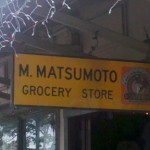
Which leads me to suggest this: While visiting such icons as the Opera House in Sydney, the Acropolis in Greece, or the Hermitage Museum in Russia are bucket list To-Do’s for most adventure seekers….the effort to take some time to go “beyond the borders”; to see what the masses usually don’t; and to follow the path less taken….is a fulfilling, enriching and specially memorable addition to anyone’s personal travel resume.  The true essence of meaningful travel is to see more than what the guidebooks tell us; to do more than our predessors have done.  To truly see the world beyond those borders, make it a point to go off the beaten path, to expect (no…hope for) the unexpected, and realize that traveling is more about a journey than it is about the destination.

The Online Airfare Maze Gets Tougher, But Not Impossible

Monday, January 31st, 2011

With online travel sites battling with some airlines, where does that leave travelers shopping for flights online? The simple answer is that they’re going to have to do more digging.  

Aircraft at Newark Liberty International Airport. American and Delta have removed flight listings from a range of Web sites.

Airlines are pulling their fares from travel Web sites amid a standoff over the fees that carriers pay to list their flights.

American Airlines removed its flight listings from Orbitz.com last month, when the companies could not agree on a new contract, and Delta withdrew its fares from CheapoAir.com, OneTravel.com and Bookit.com. More recently, Expedia.com dropped American flight listings. Delta has also notified Airfare.com, CheapAir.com, Vegas.com, AirGorilla.com and Globester.com that it will no longer allow its fares to be included on their Web sites in the United States and Canada after Friday.

The moves represent a standoff over the fees that airlines must pay to list their flights with online travel agencies. And at least one major fare distributor, Sabre, which runs a computer system that allows travel agents to see flight and fare information, joined the fray on Wednesday, announcing that it would end its distribution deal with American in August — a month before the end of its contract — and, in the meantime, would make American fares harder to see in its displays.

But American and Delta are not the only airlines becoming more selective about where their fares appear online. JetBlue, Virgin America and Spirit have increasingly been offering special fare sales only through their own Web sites. And some low-cost carriers, including Southwest and Allegiant Air, have long refused to list fares at online agencies or fare aggregators like Kayak.com, requiring travelers to visit the airlines’ own Web sites to see their flights.

So what’s the best way to search for fares now? Currently, there is no one-stop shopping site that includes all fares, but it is possible to cover your bases using only a few sites.

Start with ITA Software, which provides the technological backbone for many air fare shopping sites. It offers an easy way to narrow down the cheapest days to fly by allowing anyone to scan an entire month’s worth of fares for the cheapest rate. Click on “search airfares now” in the middle of the home page, then enter your departure date and destination and select “see calendar of lowest fares” to see which travel days yield the lowest rates. Travelers can also narrow searches by the number of stops and length of trip. But to book the actual ticket, users must go to another site, like the airline’s.

Cover your bases by adding a so-called meta-search site like Kayak.com, Fly.com or Farecompare.com, which don’t sell plane tickets but search hundreds of travel sites at once. Doing this will give you an idea of the best rates available from various sites. Each meta-search site configures its technology and accesses fares slightly differently, which can affect results. The sites also tend to differentiate themselves through special partnerships. Kayak.com, for example, receives fares from ITA Software; Amadeus, a global distribution system; and some airlines directly, including American and Delta. FareCompare licenses air fare data from more than 500 airlines via the Airline Tariff Publishing Company, which consolidates and distributes airline fares worldwide.

Before you hit the buy button, check out Airfarewatchdog.com, a site with actual people who manually search for fares and will sometimes uncover cheaper fares than the other sites. It often captures sales from Allegiant and Southwest, as well as special, last-minute fares that airlines often save for their own Web sites, like “JetBlue Cheeps” which are put on sale on Tuesdays via Twitter and listed only at jetblue.com/cheeps.

For trips to Europe, consider Momondo.com, a Danish travel search site that scours the airlines’ own Web sites as well as online agencies that focus on low-cost regional carriers, like LyddAir. It also compares rates with more than 4,000 high-speed train routes across Europe — a valuable service, as trains are often more convenient in Europe than planes. One caveat: Because of the way Momondo pulls fares, it may show expired fares in its results.

To help evaluate prices, consider Bing.com, which offers a Price Predictor that uses algorithms to determine whether a fare is likely to rise or fall in the next seven days; this can help when trying to decide whether to buy now or wait for a better rate. Students can also consult STATravel.com or StudentUniverse.com, which offer special deals for anyone enrolled in college or graduate school.

And for those who care most about the quality of the flight experience, there are a couple of notable mentions. Rather than a long list of fares, Hipmunk.com sorts fares according to an “agony” index that factors in price, length of flight and number of connections. In a similar vein, InsideTrip.com, evaluates flights by 11 criteria, including legroom, aircraft age and on-time performance.

Brrr..Don’t let cold snap the bite out of your scenic winter photos

Tuesday, January 18th, 2011
-a guideline to taking pictures in an outdoor cold setting…compliments of Barry Asman: AJ’s resident paraprofessional photographer-at-large:
Whether you’re joining us on our Winter trip to Alaska or just taking pictures in your neighborhood this winter, cold weather photography can be some of the most exhilirating shots you ever take, but these shots present some challenges.  These revolve mainly around the weather and climate we will be enjoying.  What comes to mind initially is the temperature that we will be experiencing.  Our winter temperatures will be COLD, sometimes well below ZERO!  This extreme cold will produce some interesting camera problems.  Preparing to take pictures in Alaska can be divided into two categories:  1) taking care of your camera and 2) taking care of yourself.
First, most important and most basic, is to take care of yourself.  This means staying warm, especially keeping your hands warm.  As you are anticipating, the key here are gloves.  What we recommend is to bring a pair of regular warm gloves, and also a special pair of “fingerless” gloves so that you have the dexterity to operate a camera in the cold.  There are several types of these “fingerless” gloves to use.  Our best suggestion is to go to a sporting goods store (or on line) and head to the hunting section.  Hunters use these gloves all the time.  Here is an example of some gloves: http://www.rei.com/product/305045
Now, let’s talk photography!  There are two issues that make photography in the cold interesting; power and water.
First there is the issue of power (batteries).  The thing to remember is that in cold temperatures, battery power goes down quickly.  There is an easy solution to this; carry extra batteries.  If your camera uses regular batteries, just pop a couple of extra sets in your coat, close to your body (to keep them warm).  When the set in your camera gets cold and stops working, just change them out for a “body warmed” set (the cold set will come alive when warmed up again.)  If your camera takes only proprietary rechargeable batteries, go to the camera store (or order) a second battery.  Keep one warm while you shoot with the other; then just swap them out.  Easy enough!
Now, let’s talk about water…condensation.  Here’s the problem…  If you’ve been outside for a while in the cold air, then go inside the warm house; what’s the first thing that happens?  Your glasses fog up.  This occurs when your cold glasses hit the warm air.  The same thing will happen to your camera.  If you take your cold camera onto the warm hotel, the camera will instantly form condensation (water droplets) not only on the camera, but also inside the camera.  Remember, water and electronics are not happy together, i.e. your camera’s guts will “fry”.  Believe us, we’ve seen very expensive cameras with puddles of water sloshing around INSIDE the camera from condensation.
Preventing condensation on your camera is very important and not too difficult.  Here’s the solution:  While your camera is still Alaska cold, put it in a sealable plastic bag, and seal it tightly.  Leave it in the sealed bag until, once back inside the hotel, the camera slowly warms back up to room temperature.  Problem solved!  (Going from warm to cold should not be a problem, only cold to warm.)  You can actually throw a couple of those Silica Gel desiccant packs (the kind that comes with your new shoes to keep them dry) in your camera bag and the plastic bag for added protection.  While some of the above advice may be overkill, its going to be cold and you can never be too prepared.
Some people have asked about bringing a tripod.  Granted, to get good pictures of the Aurora Borealis you should use a tripod.  But, that means you have to carry the tripod.  If you want to get a good travel tripod, you can pick one up that folds small and weighs three pounds (and some may cost up to $600).  The typical non-travel tripod from Best Buy weighs 5-7 pounds and is two feet long (folded)…trust me; you will NOT want to be carrying that thing around.  Another option is to get a small, light flexible mount (http://joby.com/gorillapod) and hope there is something convenient to clamp it to.  There are even Bean Bag camera mounts that are fairly light and easy to use; assuming there is some place to rest it.  The decision is yours to make.  Take a look at what is out there and go with it.
My final words of wisdom:
*Take plenty of Memory Cards
*Take plenty of Batteries and appropriately sized sealable baggies (see above)
*If you’re going to get a new camera for the trip, get it now and learn how to use it now (don’t wait to open the box on the plane on the way to Alaska!)  Practice using your camera and all of its settings.  Being familiar with your camera will pay off in improved pictures.
1…2…3…EXCELLENT!
Happy Shooting!

For those who yearn for real snowy fun – Alaska’s Famed “Fur Rondy”

Tuesday, January 11th, 2011

In Alaska it’s about surviving winter—a long, long winter. Fortunately, people in Anchorage have not only a frontier spirit but a sense of humor. And so there is Fur Rendezvous, affectionately called the “Fur Rondy” by locals, now in its 75th year and serving up 10 days of crazy winter fun from Feb. 26 – Mar. 6. The festival leads up to the start of the more serious Iditarod dog sled race, which kicks off March 7 (and runs a 1,200-mile course to Nome).

Racing is part of the action during Fur Rondy too, in the form of the World Championship Sled Dog Races, with 30 mushers and their teams competing for an $80,000 purse, on a 25-mile course. But that’s about as competitive as Fur Rondy gets.

And yes, Amazing Journeys is headed there! With over 30 true adventure-seekers, we are headed to Alaska from February 26th through March 6th for a true winter experience. Festivals, dogsledding, snowmobiling, the Aurora Borealis (northern lights) and even a “reverse oasis” of sorts as we warm up at the incredbile Chena Hotsprings are all part of this awesome tour.  Even in this frozen tundra, the volcanic activity actually creates an awesome collection of steaming mineral hotsprings right in the middle of the blustery Alaskan winter.

The festival events range from the sublime to the ridiculous, including whacky snowshoe softball (competitors fall a lot), a Frostbite Footrace (costumes optional) and the World’s Largest Outhouse Race (yup, teams competing pushing outhouses).  Part of the experience will be to watch exhibitions of the Native American blanket toss, where people lifted into the air on a skin blanket–an ancient form of scouting an area for hunting. This event is actually held near the carnival—even though it will be sub zero at times, the festival includes a Ferris wheel and other outdoor rides.

Fur Rondy’s popular Reindeer Run is an Alaskan version of Pamplona, and draws crowds. Thousands will be out for the 6:45 p.m. night-time fireworks. Much of the action takes place on main downtown Anchorage streets, where there are a couple of 20-story skyscrapers and offerings like a Nordstrom’s and Starbucks. Some of those streets were purposely left unplowed in a half-foot snowfall, so, for instance, mushers could race through on their trek.

Try that in New York.

Memories of a New Year in Paradise

Thursday, January 6th, 2011

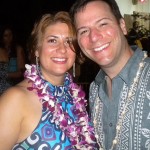
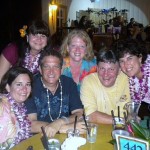
New Year’s in Hawaii; what could be more fun and romantic? 87 folks made up this very special Amazing Journey and after a week of surfing, sunning, hiking, whale watching, biking, “mud bugging”, dancing, beaching and celebrating, we look back on the memories and friendships that are only just beginning.

Perhaps the very first Amazing Journey

Wednesday, December 15th, 2010

Last year marked the 150th anniversary of the most incendiary book in the history of science, and coincidentally, the 200th birthday of the mild mannered Englishman who wrote it. Charles Darwin did not invent the idea of evolution, any more than Abe Lincoln–who happens to share his birthday on Feburary 12–invented the idea of freedom. What Darwin provided in The Origin of Species was a powerful theory for how evolution could occur through purely natural forces, liberating scientists to explore the glorious complexity of life, rather than merely accept it as an impenetrable mystery.

Contrary to popular belief, Darwin did not visit only Galapagos.  He actually only visited these islands just once in his lifetime.  As indicated from his journal, he visited and researched his evolutionary theories in many parts of the world:

“The day has past delightfully.  Delight itself, however, is a weak term to experess the feelings of a naturalist who, for the first time, has wandered by himself into a Brazilian forest” – Darwin: February 29, 1832

“It is scarcely possible to imagine any thing more beautiful than the beryl-like blue of these (Tierra del Feugo, Chile) glaciers, and especially as contrasted with the dead white of the upper expanse of snow” – Darwin : January 29, 1893

Geneticist Theo Dobzhansky wrote 37 years ago that “nothing in biology makes sense, except in the light of evolution.”  That light, which began as a glimmer in the mind of a young naturalist aboard H.M.S. Beagle, today casts a beam so bright we can read the very text of life by it.  Darwin would be overjoyed to see how much he did not know, and how much we have yet to learn.

America’s Best and Worst Airports

Wednesday, December 8th, 2010
Just in time for the busy holiday travel season, the Daily Beast is out with its second annual list of America’s best and worst airports. There’s good news for those who fly from Phoenix but bad news for those who use Newark.
The Daily Beast ranked the 27 largest airports in seven categories, including how quickly travelers get in and out, the number of incidents and accidents, and amenities. Each of these categories was weighed accordingly, with the largest components being on-time departures and arrivals.
Sky Harbor International Airport in Phoenix gets the top spot with on-time departures 84 percent of the time in 2010, on-time arrivals at 86 percent, on-time holiday departures at 85 percent and on-time holiday arrivals at 84 percent. The average time spent waiting in a security line at Phoenix was only 10 minutes.  The website also ranks Phoenix high in categories including safety and airport amenities.

Other airports getting accolades include Seattle-Tacoma International in the second spot and Cincinnati/Northern Kentucky International Airport in third. Los Angeles Airport and Orlando International Airport rounded out the top five.

But the picture wasn’t so cheery for passengers at Newark Liberty International Airport, which ranked at the bottom of the list for the second year in a row. The Daily Beast says on-time departures were only 76 percent, on-time arrivals 73 percent, on-time holiday departures 77 percent, and on-time holiday arrivals 76 percent at the New Jersey airport, though average security wait time was only 7 minutes. Newark also ranked 24th in terms of safety and 26th in terms of airport amenities.

John F. Kennedy International in New York also ranked at the bottom of the list.

George Bush Intercontinental Airport (I said “airport” – not the man himself!) in Houston was ranked number one in 2009, but fell all the way to the number nine spot this year. The airport lost points for having a 77 percent on-time arrival rate during the holidays, as well as being near the bottom of the list in the “tarmac nightmares” category.

Charlotte/Douglas International Airport, however, was one of the biggest rank gainers since last year. The airport came in at number eight, a seven-spot jump from last year.

To pull together their list, the Daily Beast used data from groups such as the Bureau of Transportation Statistics, Flight Explorer and the JD Power and Associates 2009 North American Airport Satisfaction study.

Around The World In 8 (brightly lit) Days

Thursday, December 2nd, 2010

As we begin the festive holiday of Hanukkah tonight, we embark on a tradition that’s thousands of years in the making.  As Jews in the 21st century, we have been made aware of the candle lighting customs…the spinning of dreidles…the giving of gifts…and the eating of sufganiyot (jelly donuts).  But that’s here, in America.  What about other parts of the world?  Is our tradition varied at all by culture, geography or even political climate? 

I’ve been to Shabbat Services all around the world; from Australia to Costa Rica…Argentina, Croatia, England and even Russia.  What I’ve noticed is that as people we are all so different…..yet as Jews, we are all so much the same.  I may have (tried to) read the non-Hebrew portions in Spanish, Croatian or Russian, but when it came to the traditional prayers read in Hebrew, it was as familiar to me as my Gates Of Prayer. The Sh’ma, Shalom Aleyhem, Lecha Dodi and others….all just the same as mine back home.  

But I digress. Hanukkah.  One would think that this meaningful, yet rather easily understood holiday would be celebrated just as simply around the world.  You light candles, sing songs, spin dreidles and eat latkes & donuts. How much variation could there be?  Well, see the stories below for a “wow” on just how different Hanukkah can be:

Spanish Jews hold first Hanukkah in five centuries –

The Jewish community of Spain held a public celebration of Hanukkah Dec. 20, 1998, for the first time in more than five centuries.  Members of the small community lit candles at the same location in Girona, Spain, where their ancestors sought protection in 1391 from anti-Semitic violence that was prevalent at the time. Jews were expelled from Spain in 1492. “This is an emotional and unforgettable day,” Mayor Joaquim Nadal told the gathering outside the ruins of Gironella Tower.  The candle-lighting ritual on the eighth and last day of Hanukkah drew close to 1,000 people, including many non-Jews. The ceremony was lead by Eliahu Bakshi Doron, Israel’s chief rabbi of Sephardic Jews, who trace their ancestry to Spain.

A Jew in Japan (trying to) celebrate Hanukkah  –   One thing that I do every year at this time is decorate my English school with Hanukkah memorabilia. Near the entryway, I put out a hanukiyah . On the table in the lobby, I laid out a number of dreidels. The walls are decorated with posters of children eating latkes  and sufganiyot  playing with dreidels, and, of course, lighting hanukiyah.

 The yearly display always draws a big response because it is unfamiliar to Japanese people (many American people, too, I imagine). Kids love to play with the dreidels (tops are a popular New Year`s activity in Japan). Young and old admire the candles displayed in the hanukiyah. And, invariably, several people say, “I didn`t know that people in America celebrated Christmas like this!” Oy Vey! One student even looked at a picture of Judas Macabbee and said, “I thought Santa Claus always wore red!”

MEXICO  In Mexico Hanukkah is written “Januca,”. The Jewish Hanukkah customs are very similar to those of Jews elsewhere except that the food may be a little different. Instead of latkes and sufganiot which are common among the Ashkenazic Jews of Russia and Eastern Europe the Sephardic Jews of Mexico tend to favor things like “buñuelos” which are fried fritters drenched in sugar syrup and also balls of corn dough with marmalade inside. Like their Jewish counterparts around the world they play the game of “dreidel” which they call “toma todo” and they call the dreidel top a “pirinola”. To make their holiday really special and authentically Mexican the add a Mexican “piñata” in the shape of the dreidel top to the festivities.

Today, there are about 50,000 Jews living freely in Mexico and openly practicing their ancient religion. I hope they all enjoy their Hanukka festival. Happy Hanukka to everyone!!!

The Light of Hanukkah Menorahs shall Shine all over Russia –  This year, despite the global crisis, the light of Hanukkah candles will shine not only for kids, but, for all Jews across Russia. In the outgoing year, as never before, Jews had the support and understanding of the government. For us, this support is very important, and we are pleased that the Russian government shows its support for all the traditional religious confessions, in particular, for its care for our Jewish community.

Without this support, the full-blooded rebirth of Jewish life in Russia would have been impossible. Firstly, the state returned to us many buildings that were owned by the Jewish community before the Revolution. Today, the government actively cooperates with the Jewish community in tackling social problems. Recently, our community won one of the support grants for non-commercial organisations. With God’s guidance, we will use it to implement our plans in the incoming year. Generally speaking, without the involvement on the part of the state, the Jewish community would have been unable to achieve the successes it has achieved in the sphere of education, enlightenment, and religious life”.

Eight days of Hanukkah celebrations will take place  throughout the entire country. During these days, in Moscow, there will be holiday concerts, fairs, and music and arts festivals, which shall bring together ensembles and performers from many Russian regions, Israel, and Jewish communities around the world.


Memoirs of a Journey Down Under

Wednesday, November 24th, 2010

Dear Mom and Dad, 

Well, our Australian Down Under Tour is almost over and I’m very sad to see it end.  Like a huge meal for the whole family over Thanksgiving, it seems that after months of planning and gearing up, it’s all over in a blink.  Still…it’s been a truly “amazing journey” in every sense of the word.  Every day was the best day of the trip so far

After I flew to L.A. and met our group leader Bill and all the other travelers, we had the loooooongest journey of the trip so far…but it wasn’t really that bad.  We were on Qantas’ new 380 mega jet liner and it was very modern and not too uncomfortable.  That is, until we heard a few days later that pieces of our jet fell from the sky over Singapore….soooo, we’ll be flying home on something a bit smaller. On the flight I caught up on a few good books, watched 27 episodes of “How I Met Your Mother”, and even watched us take off and land from the plane’s “wing cam”. Ambien helped too, and I did my best to sleep like a baby for 6 hours…in the full upright position!

When we landed in Melbourne we were met by our Tour Manager Barry and the fun began. 

I had no idea on that first day just how much fun Barry would be, but his personality and “behind the scenes” organizational skills would ultimately make the trip seem flawless.  Thank goodness our rooms were ready, so I freshened up and then headed out for a little exploration before we got to know the group a little better at our formal welcome program and dinner. Then the jetlag kicked in, and bed in the fully downward prone position was a welcome reprieve.

 Our first tour the next day immediately made the long journey around the world worth every minute it took us to get here.  We headed outside of the city to the You Yangs National Park and the Serendip Sanctuary for a little safari of sorts, searching and viewing kangaroos and koalas.  I’d dreamt for years for the chance to see kangaroos and koalas in the wild, and just reliving it right now is giving me goose bumps.  We walked among them and were sometimes so close that we could almost reach out and touch them.  Our outback guide, Janine was so passionate about these creatures and her zeal made the day even more fun and I have to say that this was one of the highlights of the tour.   

And it was only the first day!!

The rest of our time around Melbourne was filled with seeing the city; a bustling cosmopolitan with a buzz for food, history, architecture and a gutsy party atmosphere surrounding The Melbourne Cup horse  race that would parallel a week long New Year’s celebration.  You should have seen these getups–especially the hats!

 I loved Melbourne and all its energy, but the city soon gave way to more best days of the trip so far. About as big a contrast to the big city as we could get, arriving into Ayers Rock was like a time warp.  In a matter of a few hours, we went from a developed metropolis to an ancient monolith surrounded by desert. This was the true Outback.  Sure we had to survive some death defying turbulence on the flight over…but we were hundreds, if not thousands of miles away from any modern civilization. Human existence in this part of the world consisted of our small resort town built for tourists and Aboriginal villages that dotted the outback throughout the continent. 

 So here we were in the outback.  I…was….in…..The Outback! I couldn’t believe it.  Our first order of business was a Shabbat Service.  Bill somehow managed an Outback Challah and after a short but very meaningful service we hamotzied, kiddushed….and then headed off to what they call The Sounds of Silence.  I have to admit that I didn’t know what to expect at this event, but I have to say it was one of the top memories of the entire tour.  We were taken to a small hillside overlooking Ayers Rock for champagne during sunset…and then led down a path to a small cutout in the desert where a catered setup of tables and food awaited.  We were surrounded by nothing but rocks, desert, sand and bush.  If it weren’t for the setup of tables and food, I would have felt like I was in the middle of nowhere, never to be found again.

As the sun set and darkness loomed, soon only the candles and burners illuminated our place on this part of earth. Oh, and yes, the stars!  First I saw ‘em, but didn’t really notice them…until the true meaning of The Sounds of Silence took hold.  But, first as with all good Jewish functions….the festive meal!  We dined on crocodile, barramundi, kangaroo, lamb, and a variety of other local delicacies.  We also inadvertently dined on some of the local flying critters too…who, although uninvited, chose to stay with us for the duration of the evening, despite the cries and screams of protest from a jittery few.

A didgeridoo player harmonized our experience and chit chat among the participants filled the air…until dinner was over and the true sounds of silence took hold.  We were given a moment of silence, so to speak, to take in the essence of the outback.  Some dude at another table tried to ruin the moment but he didn’t. The lights were turned off and it was so dark that that only the stars in the sky could be seen. Billions and billions of stars…constellations, shooting stars, planets and an endless plane of the universe.  Wow, was that special!  Then, our gastronomical experience turned into an astronomical experience as we followed an articulate astronomer through a passionate and story-filled tour of the sky.

After dessert in the desert, our sounds of silence experience was over, and it was time to look ahead for more fun things to come.

 When daylight hit–well, more like BEFORE daylight hit–we headed to the friendly skies for a flight seeing tour over Ayers Rock and the Olgas.  We had two of the cutest…and youngest…pilots I’d ever seen.These two dudes learned to fly before they learned to drive, but our lives were in their hands as they were the ONLY 2 flightseeing pilots in Ayers Rock.  But they were awesome. Young, fun, cute yet very professional and great guides as we viewed the incredible rock formations from a few thousand feet above.

The rest of our time in Ayers Rock was devoted to touring the rock, hiking the Olgas and hanging out at our gorgeous oasis in the desert. 

We also had a really fun dinner cooked by Bill and Barry on the “barbie” before calling it a day and heading off to Cairns and the Great Barrier Reef.


Our first day in this tropical beach town involved the earliest wakeup day of the trip so far, for an amazing sunrise hot air balloon ride over the plains and small communities of Cairns.  A team of 5 balloons sailed high in the sky which was a sight to behold in and of itself.  From our koala balloon we saw mobs of kangaroos, said hello to one of the neighbors from high above her rooftop and even saw our reflection in the river below. 


Our pilot Jay was hot…and I’m not just talking about the fire he used to fuel the balloon.  After we came back to earth and helped the crew let all the air out of the balloon we were treated to a champagne breakfast before heading down to the water for our excursion to The Great Barrier Reef.  Wow…first kangaroos from the sky, then fish and turtles and coral from under the sea.  My new friend Jen and I even saw a shark swim right by us! The lunch on Green Island was NOT the best meal of the trip so far, but the time on the beach, snorkeling in the water and taking in a small part of one of The Seven Natural Wonders of the World made this day befitting to the premise of “living life to the fullest”. 

Like a great meal, a scrumptious dessert is the perfect compliment to the experience. The perfect dessert to this incredible day was given to us upon arrival back on land when we went over to the Cairns Wildlife Nature Dome for the chance to hold a koala in our arms. I only got to hold him for about 30 seconds, but the feeling of his little paws around my arms will stay with me forever.

We spent a day in the Daintree Rainforest area where we had the most special opportunity to feed kangaroos and wallabies, hold another koala and see really up close and personal a variety of other indigenous wildlife. We even took a cruise on the Daintree River where learned about the mangroves, crocodiles and other living creatures that make up this ancient ecosystem.

Our final day in Cairns was really fun.  First we had a little retail therapy in an artsy village called Kuranda and then we hopped aboard this amazing gondola called the Kuranda Skyrail that took us high above the Kuranda rainforest.  This skyrail is the 2nd longest such gondola ride in the world and it was way cool being so high above the treetops.  We even saw cockatoos flying below and resting on the tree limbs. 

Once we landed, we walked among the Aboriginals.  We painted our faces, learned to throw a boomerang, played a didgeridoo and even had a few laughs as Bill and Laura danced like no one was watching on stage with the Aboriginals.  A little more retail therapy in the gift shop and it was time to go.

 Time to go to Sydney!

Mom, Dad..while I’ve been expressing my love for each of the elements we shared throughout Australia, nothing could have prepared me for how much I fell in love with the city of Sydney.  Bill told us early on that it was his favorite city on earth and now I see why. Magnificent, majestic, eclectic, fun, friendly, romantic, entertaining…the adjectives could go on forever and ever.  We toured the Opera House, climbed the Harbour Bridge, strolled Bondi Beach and toured The Great Synagogue.  We partied with the locals, met some fascinating people, dined with the most exceptional views and well, yes….shopped just a little bit more.  You could plant me on Bondi Beach…or on a chair near the Sydney Harbour….or just leave me wandering aimlessly anywhere in the city, and I’d be a happy boy no matter where or what I was doing in Sydney.  My goodness….I loved Melbourne and Ayers Rock and Cairns, but every day in Sydney was the best day of the trip so far.

 I overheard someone in my group say today, “I’ve never said the word “amazing” so many times in two weeks as I have here in Australia. In all honesty, Mom and Dad, Australia truly is a wonderland of amazing people and amazing things to see and do.  It’s now in my memory…but it is forever in my heart and soul. 

I have met some great new friends, I have seen breathtaking scenery, I have had an adventure like nothing I’ve ever had before…and it truly has been a most amazing journey.

I can’t wait to come home and share my pictures with you…and to relive the memories with my new friends who shared this experience with me.

 See you very soon,

 Love,

Me