General Archives - Page 13 of 17 - Amazing Journeys

Archives

Wanderlust Blog

Here at Amazing Journeys, we’re lucky have the best jobs in the world—and we think our good fortune is worth sharing. So, when your next journey seems like a distant dream, take a few minutes to explore our WANDERLUST blog—it’s chock full of engaging tales and helpful tips from our travels around the world. Check out the most recent entry (at the top) or search by your preferred criteria. Consider it motivation for your next embarkation.

Border

The Best Way to Carry Money Overseas

Monday, January 20th, 2014

-by Erin

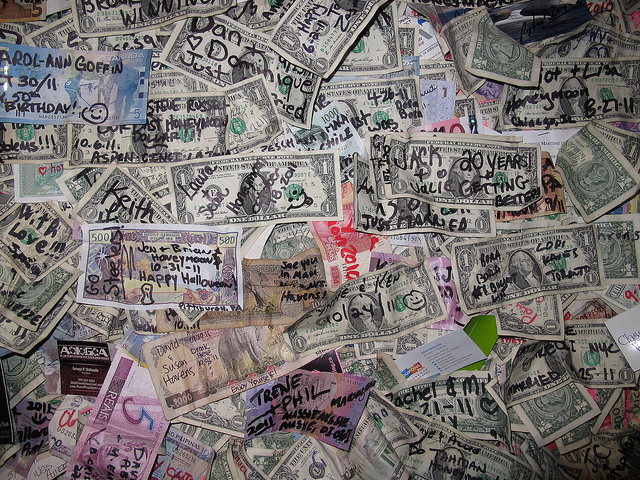
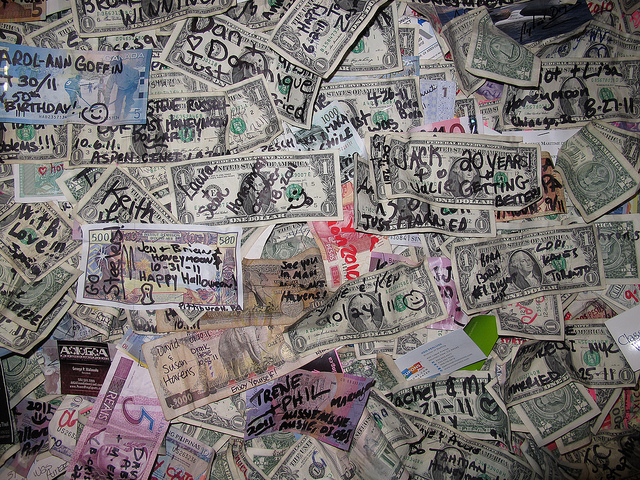
Before you leave for your next trip abroad, take a moment to think dollars and cents – or should we say pounds and pesos? Get the most for your money when traveling internationally by doing a little homework first. money 1
The most important step is to know your options. In days of yore, traveler’s checks were the most popular way to carry money overseas – but today’s travelers are much more likely to rely on credit cards and ATM withdrawals, which usually offer better exchange rates and lower fees.

What’s the best option for you? And how can you avoid those pesky currency conversion fees when making purchases abroad? Read on for answers to these questions and a comprehensive roundup of all your currency conversion options when you’re traveling overseas.

Credit Cards

Best for: Large purchases such as airline tickets, hotel bills, car rentals and restaurant meals.

Pros: The biggest advantage to using credit cards while traveling overseas is that credit card purchases are exchanged at the interbank exchange rate, usually the best rate you can get for currency exchange. While most credit card issuers charge currency conversion fees each time you make a purchase in a foreign currency (generally 1 percent from Visa or MasterCard plus an additional 1 – 2 percent for themselves), these fees are typically lower than those you’d pay to convert your own currency at a change bureau. And there are a few cards out there (many from Capital One) that do not charge any foreign transaction fees at all, not even the ones from Visa or MasterCard. Check out CardHub.com for a list.

Cons: Some restaurants, stores and even hotels won’t take credit cards, so you’ll need to have cash on hand at all times. While you can use credit cards to get cash advances at ATMs, bear in mind that they’ll be subject to any finance charges your credit card company imposes – which can add up very quickly. Plus, if you’re not home by the time the bills come in and you haven’t made arrangements to pay them, you’ll be hit with hefty finance charges on these advances.

One problem for U.S. travelers is the growing prevalence of “chip-and-PIN” credit cards in Europe, Asia and South America. Designed to reduce fraud, these cards rely on an embedded chip that transmits information to a merchant, which the consumer then verifies by entering a PIN. While U.S. cards with magnetic stripes will still work as long as there’s someone to swipe them, many travelers report problems using their cards in ticket vending kiosks, at gas stations or in other places featuring automated payment machines. If you find yourself in this dilemma, your only alternatives are to find an attendant to scan your card or to use cash instead.

These cards are not yet widely available in the U.S. However, several banks, including Citi, Bank of America and Chase, have begun issuing dual credit cards that use both the magnetic stripe and the embedded chip, and Travelex has introduced a prepaid chip-and-PIN MasterCard that works like a hybrid between a credit card and a traveler’s check.

What You Need to Know: The first thing you should do if you are traveling abroad with a credit card, even if you only plan to use it in case of an emergency, is to call the issuer and ask which fees will apply to your purchases, both in local currency and in U.S. dollars. We recommend calling before each trip, as these policies may change without notice.

While you’re on the phone, you’ll also want to let your credit card issuer know when and where you will be traveling – that way the sudden international activity on your account won’t trigger your issuer’s fraud alert system. As a precaution, we recommend bringing two credit cards on your trip in case one stops working. Finally, get a phone number that you can use to call the company from overseas if your card is lost or stolen. (The 800 number on the back of your card typically will only work in the U.S. or Canada.)

Some merchants (particularly in Europe) offer what’s known as dynamic currency conversion, which means that they’ll charge you in dollars rather than the local currency. Because some card issuers will waive the currency conversion fee if your overseas purchase is made in dollars, dynamic currency conversion could help you save a few coins. However, keep in mind you’ll almost always get hit by a conversion fee from the merchant instead – sometimes up to 5 percent – so you may end up losing out on the deal. Be sure you know which fees apply to either option before deciding which currency to use.

A few other caveats to bear in mind: Some hotels and car rental companies may put holds on your credit card for the amount of your total expected bill. This can use up your credit line before you’ve actually incurred and paid for the charges. All merchants are supposed to inform you if they do put a hold or “deposit” on your card. If they do, make sure you clarify that the hold has been removed when you’ve paid your bill in full.

Keep in mind that you may not have as much protection overseas as you do at home when problems arise over inaccurate charges. Incidents are always being reported of travelers being charged twice for the same item or for items they never purchased, and credit card companies have been unwilling or unable to intercede on their behalf. Always watch merchants imprinting your card and keep your receipts. After you get home, check your credit card statement. If you see charges you didn’t make, call your creditor and ask them to dispute the charges.

Debit and ATM Cards

Best for: Getting cash in local currency.

Pros: You’ll get the same great interbank exchange rate when you make cash withdrawals with your debit or ATM card as you do when you make a credit card purchase. With ATMs available in major cities and airports all over the world, this is generally the cheapest and most convenient way to get cash in the local currency.

Cons: Each cash withdrawal you make will usually be subject to currency conversion fees, foreign ATM fees or other charges from your bank and/or the local bank that maintains the ATM. Debit cards work pretty much the same as regular credit cards for purchases, but if your card is lost or stolen you may not have the same protection. By U.S. law, as long as you report your card missing within two business days, your maximum liability for use of that card will be $50 – the same as for a credit card. However, if you wait any longer, you could be responsible for hundreds of dollars in unauthorized charges.

What You Need to Know: If the ATM card from your home bank isn’t connected to the worldwide Cirrus or PLUS networks, you may want to look into getting a MasterCard or Visa debit card. While they look and can be used like regular charge cards, they actually debit your checking account the same way your ATM card does.

If you are renting a car, you should be aware that while you can use a debit card to pay for the rental charges, you might not be able to reserve the car with this type of card.

Finally, don’t forget to call your bank and make it aware of your travel plans; as with credit cards, sudden international activity using your debit card could cause your account to be frozen.

Cashmoney 2

Best for: The first 24 hours of your trip – to tide you over until you can find the nearest ATM.

Pros: It’s often a good idea to get some foreign currency before you leave home so that you have cash on hand to handle your immediate expenses – like buying a meal at the airport or taking a cab to your hotel. This way you’re not stranded without cash if the airport ATM isn’t working or you arrive after the local exchange bureau has closed.

Cons: You typically won’t get a great conversion rate from your home bank, and you may also have to pay fees or commissions. If you’re traveling to a major international airport in a large city, which will likely have multiple ATMs and change counters, getting currency beforehand probably isn’t necessary.

What You Need to Know: You can get foreign currency from your local bank, online or at the airport. Try your local bank first, as they may waive fees for certain accountholders. We recommend bringing $100 – $150 worth of foreign currency.

Traveler’s Checks and Check Cards

Best for: Emergency backup if you can’t find a functioning ATM (checks) or a secure alternative to cash (checks and check cards).

Pros: Traveler’s checks and check cards provide more security than cash because they can be replaced (usually within 24 hours) if lost or stolen. While traditional traveler’s checks have largely gone the way of the dinosaur, Visa and Travelex offer travel cards that are prepaid like traveler’s checks but work like credit cards for purchases and ATM withdrawals. To avoid the aforementioned problems that U.S. travelers have at overseas chip-and-PIN machines, Travelex even offers a chip-and-PIN card (available in several different currencies). Traditional checks are still sometimes useful as currency if you can’t find a functioning ATM.

Cons: The exchange rate for traveler’s checks is not as favorable as the interbank rate you’ll get when using a credit or debit card, and very few merchants accept the checks for purchases these days. You’ll also have to pay commissions, shipping charges and/or conversion fees to purchase and cash the checks. The prepaid cards give you better exchange rates, but there are plenty of fees here too – look out for activation fees, charges for reloading the card, ATM charges or inactivity fees. In most cases, you’re probably better off using your own debit card.

What You Need to Know: Keep your checks’ serial numbers in a secure but separate place from the checks themselves in case they’re lost or stolen.


Original source: Independent Traveler

Announcing 20’s and 30’s division of Amazing Journeys

Monday, January 13th, 2014

-by Erin

annFrom the highest points of Machu Picchu to the back roads of Vietnam, Amazing Journeys is pleased to announce that we are now offering trips specifically designed for travelers in their 20’s and 30’s. This new division gives those in their 20’s and 30’s the chance to participate in the fabulous travel that we have been offering to our clients for more than 20 years. Our new 20’s and 30’s division will offer our unparalleled expertise and customer service to the younger market while still providing incredible itineraries and vacations that Amazing Journeys is known for.

Two trips will be offered in 2014 specifically for the 20’s and 30’s age group, which will include more active and adventurous options.

Our first trip for the 20’s and 30’s group is an 8-day tour through Peru, including a 4-day trek along the famed Inca Trail, one of the world’s best-known hikes that will reward those willing to break a sweat. This adventure offers time in Lima, Cusco, the Sacred Valley and Machu Picchu and will truly be the adventure of a lifetime. August 30 – September 7. Click here for more details on our trip to Peru.

OLYMPUS DIGITAL CAMERALater in the year, we will be offering to those in their 20’s and 30’s, an 11-day tour through Vietnam. This trip will highlight the history, culture and beauty of Vietnam through activities such as biking the countryside and kayaking Halong Bay. December 6 – 16. Click here to be added to our interest list.

If you are in your 20’s and 30’s, we hope you’ll join us on one of these upcoming trips. And if you know of someone who would like to travel with us, please be sure to let them know about these trips we have created just for them!

Looking forward to a great year of travel!


Traveling isn’t for everyone

Friday, December 20th, 2013

-by Erin

Traveling is not easy. It can be time consuming, exhausting and challenging. There are time differences and jet-lag, long flights and early mornings, language barriers and currency calculations. Sometimes you may not understand the directions or know what you are eating but for those of us willing to put up with the unknown, there are huge rewards to be gained.

Imagine opening your window to the sounds of Barcelona or hiking to the top of a mountain in Canyonlands National Park in Utah or tasting rich stews in local markets of Morocco. Think of how excited your friends will be when you tell them that you have crossed not one, but two things off your bucket list. Envision that new piece of artwork hanging in your house that reminds you of your travels every time you walk in the door. Get excited about getting together with new friends that you have made to regale the time you went exploring and came back with the most incredible story to tell.

Travel can be all this, and more. Sure, it’s not for everyone, but if you are the kind of person who is willing to put yourself out there for an amazing experience, to sacrifice that extra hour of beauty sleep to wake up and see the sun rise over the mountains of Machu Picchu, then traveling is definitely for you! The world is your oyster and we can’t wait to explore it with you!


Cruise industry seeking big jump in telecom speeds

Monday, November 25th, 2013

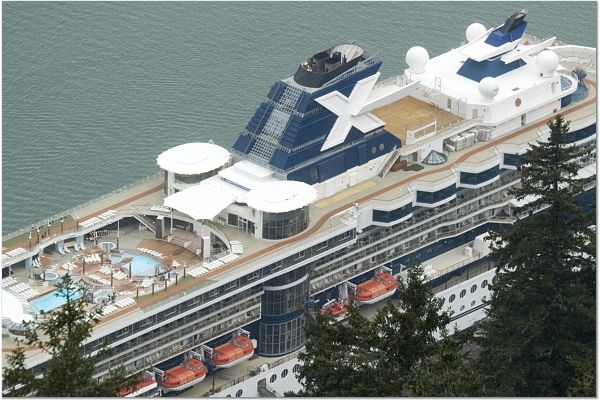
If you’ve ever been on a cruise and decided that leaving your emails behind just wasn’t for you, you probably wished you had.  Understandably some people need to stay connected even while on vacation….maybe for work purposes or to stay in touch with a sick relative or just to chronicle the vacation to friends on facebook back home.  The frustrations of online connectivity while sailing at sea aboard a passenger cruise ship has long been a thorn in the industries bow and stern.   Slow connections and dropped communications coupled with charges so deep even the waters of the Atlantic Ocean couldn’t compare, have long been maddening and mounting means of angst in an otherwise blissful vacation experience.  Fortunately, that’s about to change.

Faced with accelerating demands by passengers for digital connections for their mobile devices, cruise lines are pushing vendors for faster, cheaper, more reliable telecommunications at sea. In response, the satellite providers are getting creative in their efforts to provide the bandwidth that enables Internet access, social media use and other telecom services. Solutions include creating a hybrid of satellite and land-based carrier networks, installing additional antennae on ships for more flexible, reliable signal tracking and using satellites in lower orbits to reduce signal transmission times. In some cases, passengers can expect a “dramatic” rise in the speed of Internet access from the ships, one analyst said. The innovations from companies such as MTN Satellite Communications and Harris CapRock are being implemented now, although they won’t start being ready for use until next year or 2015. 

“There are a whole series of new technologies and satellites that are going to be available in the coming couple of years that will greatly improve the performance and the available bandwidth on those ships,” said Rick Simonian, president of maritime solutions at Harris CapRock. With its purchase of CapRock Communications in 2010, Harris Corp. embraced a commitment to the cruise ship segment.  Since then, it has won contracts with Royal Caribbean Cruises Ltd. and Carnival Corp. to install new equipment and provide services. Its contract with Carnival, disclosed in mid-October, covers more than 100 ships in the fleets of 10 Carnival brands. Harris CapRock said it will provide bandwidth levels higher than those previously available on each fleet to meet “new service requirements Carnival set for its guests and crew.” Simonian said a key piece of the puzzle is installation of more than one satellite antenna on each ship. Most ships, he said, have a single antenna, housed in a spherical dome fixed to the ship’s mast.

“The problem with that is that if the ship is turning and the line of sight to the satellite gets blocked by the smokestack, or if they’re in some other obstruction, then the service goes down,” he said.
Two antennae mitigate that problem and will also be capable of switching back and forth between different radio frequencies, C-band and Ku-band, using the resiliency of one and the greater bandwidth of the other as conditions change.
Earlier this year, Harris CapRock completed installing gear on 33 ships belonging to Royal Caribbean International, Celebrity Cruises and Azamara Club Cruises. It will also integrate an ambitious new satellite system from O3b Networks, starting with the Oasis and Allure of the Seas.  O3b is launching satellites that orbit about 8,000 miles above the Earth, rather than the 23,000-mile distance of existing, geostationary satellites.  That cuts the back-and-forth signal speed to the satellites from 720 milliseconds to 130 milliseconds. “It will dramatically increase the amount of bandwidth available, to kind of unheard-of rates,” Simonian said. “The only ships that get rates like this would be Navy aircraft carriers, just for comparison.” O3b has launched four of its eight-satellites constellation and should be ready to serve the Oasis and Allure next spring, Simonian said.
But the O3b concept has some limitations and is unproven, said Chris Quilty, who covers satellite companies for the Raymond, James & Associates brokerage. “Royal Caribbean has made a huge, very expensive bet on a category-killer solution for the cruise industry,” Quilty said.

One limit is that coverage doesn’t extended beyond latitudes up to 45 degrees north and south of the equator, which excludes cruise areas such as the Baltic Sea and Alaska. Also, O3b’s satellites aren’t fixed in geosynchronous position like higher-orbiting satellites, so they have to be tracked.  “One is coming up over the horizon as the other is going down,” Quilty said. The tracking system that’s required, he said, “is much more complex. I would say it’s a high-risk, high reward proposition.” MTN Communications is offering a different solution, one that seamlessly switches satellite signals from satellites to land-based networks when ships approach or are in ports. When that happens, existing satellite bandwidth is freed up for use by cruise ships farther out at sea. “Adding more satellite bandwidth will no longer solve the ‘constantly connected’ demand,” said Errol Olivier, president and CEO of MTN. “And, way too often, adding more bandwidth just raises the costs for cruise operators.”
As cruise lines roll out MTN’s hybrid system and other solutions, such as the one offered by Harris CapRock, the retail cost of Internet service, which is currently 50 cents to 75 cents per minute, should come down, even as performance improves. How much prices will drop and speeds will increase is up to the cruise lines, Simonian said, adding, “That information is proprietary. They [the cruise lines] want to protect that.” MTN once held upward of 90% of the cruise industry communications market, and it still serves Norwegian Cruise Line, Oceania Cruises, Pullmantur, Windstar Cruises and others. Still, Harris in recent months has gained a big foothold by landing the two biggest companies in the industry as customers. Brad Grady, an analyst at Northern Sky Research, said that because Harris is a big, public company with a broad client base ranging from the U.S. Navy to the global oil and gas industry, it can use its scale to reduce prices.  “There is always a bigger fish willing to do more at a better price,” he said. “And for larger end-users, specialization does not necessarily beat price.” Quilty said that except for the U.S. government, Harris is the largest consumer of satellite capacity in the world.  “By definition it is an economy-of-scale business, so you can generally buy capacity at a lower price,” he said.

Original source:  Travel Weekly Magazine

Just who is Amazing Journeys?

Tuesday, November 5th, 2013

-by Erin

What is it that makes Amazing Journeys truly amazing?

If you’ve traveled with us before, you already know the answer to this question. But if you’ve never been on a vacation with us, you might just be wondering what is it that makes Amazing Journeys so amazing?

At Amazing Journeys, we believe that traveling is about more than escaping your daily cares – it’s about enhancing your life by viewing it through an always-fresh, often-exotic new lens. Every year is different; each trip is unique. What remains consistent is our unfailing commitment to quality, our unparalleled expertise with the Jewish group travel experience and our genuine passion for discovering new destinations. With over 75 years of combined travel experience, we take the guesswork out of vacation planning, so that all you have to do is sit back, relax and enjoy the ride! Click here for introductions to the Amazing Journeys team.

New to AJ and want more information? Click here so we can answer some of your most commonly asked questions.

Throughout the years, we have sent over 10,000 passengers on their dream vacations! These trips have been incredible – but don’t just take our word for it – click here to see what some of our passengers have had to say.

We are always adding new trips to our upcoming line-up so check back to our trips page often so you don’t miss the opportunity to cross another location off your bucket list. We will be posting new trips soon including a cruise to Spain, Italy and France, a National Parks Adventure in the States, a land tour in Ireland, exploring Morocco and a long weekend getaway to Hawaii. Also on the horizon, a brand new division with trips exclusively for those in their 20s and 30s including adventure travel! Tell your friends, your family members and your co-workers that we may just have the perfect trip for them in 2014.

Join in on the fun and get to know our friends on Facebook. We always have something fun to share! Hope to travel with you soon!

Rollin on the River

Tuesday, October 22nd, 2013

– by Malori

Ever hear of a river cruise? Are you wondering what all the buzz is about? It’s the fastest growing segment of the tourism industry and 24 new ships are being built by six different companies, all debuting in 2014.

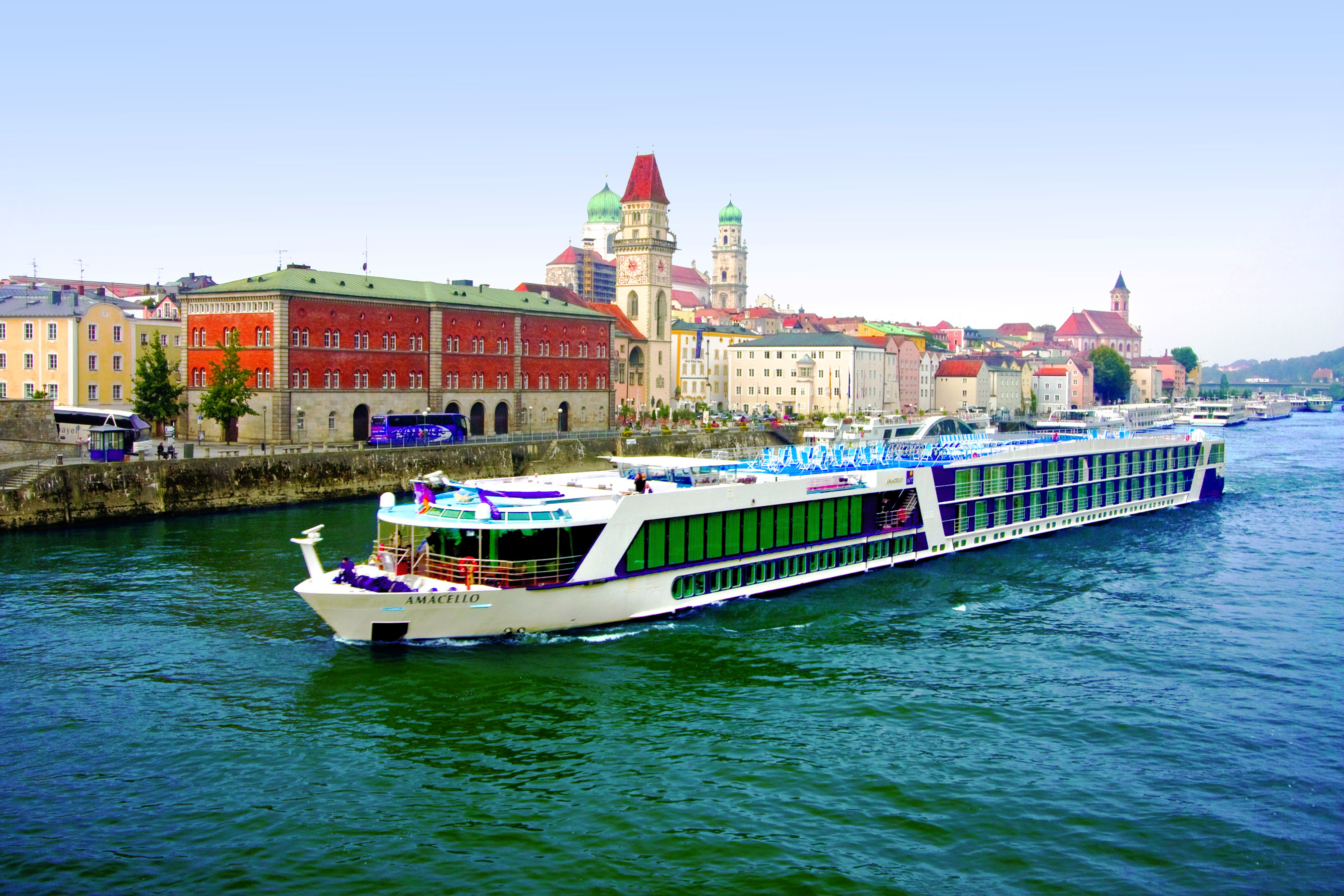
River Cruising opens up a world of possibilities of intriguing destinations. Pulling up right alongside a local dock, the river cruise experience lets you enjoy scenery along the way, and then coming directly in to the city center to explore on foot, by bike or on an array of complimentary guided excursions. According to AMA Waterways, in business since 2002, “there is no better way to experience the soul of a destination than on a leisurely river cruise, immersed in history, culture and breathtaking natural beauty.”

Traveling along rivers, these smaller ships are built with shallow drafts and can navigate smaller waterways, unlike their oceangoing cousins who cruise the high seas. During your journey along the rivers, you can look out from your balcony, window or one of the public spaces and see the ever-changing landscape of the destination you came to see. Many of the “Next-Gen” river cruises use a “long-ship” design that allows more interior space for guest rooms, bars and restaurants, spa and workout facilities, and even a pool with a swim up bar.

Onboard, the experience is more like a small boutique than a large hotel. The staff is dedicated to treating their guests like members of their own families, and several offer a premium experience. With local musicians to entertain, cocktails and dancing, lectures on local history and culture, time on board the ship is spent feeling like you are on vacation, whether it’s relaxing, socializing with other passengers, sunning by the pool, working out or getting a massage.

On most river cruise, complimentary wines are offered with meals, further enhancing your local cultural experience. You get to try wines from the local regions you are visiting, along with regional specialties the chef prepares each night.

River Cruises offer many themed cruises as well. From Chocolate Cruises to Wine Tasting Cruises to Jewish Heritage Cruises, there is a theme that fits nearly every taste and taste bud!

Amazing Journeys is joining in on the River Cruise fun on our Jewish Heritage River Cruise next summer. Sailing from Vilshofen, Germany on August 6 and ending in Budapest, Hungary on August 13, we will transport you along the Danube River through the magnificent landscapes of the Sound of Music Country and along the shores of our Jewish culture and our legacy. From synagogues to Jewish districts, modern museums and historical monuments, this cruise will be one you will surely remember. For more information on our Jewish Heritage cruise, click here or call us for information on any other river boat cruise at 412.571.0220.

Airline fees you may not hate

Friday, October 11th, 2013

-by Erin

Within the past few years, passengers have been hit with airline fees for seemingly every part of your trip.  From booking your flight with an actual person on the phone to checking your suitcase to enjoying an in-flight snack, each transaction had travelers opening up their wallet again and again.  It was maddening how things that were once included in your day of travel are now a la carte with additional costs.  With that being said, airlines are now introducing a new slew of fees, but this time passengers might actually like them. Unlike the first generation of charges which dinged fliers for once-free services like checking a bag, these new fees promise a taste of the good life, or at least a more civil flight. Extra legroom, early boarding and access to quiet lounges were just the beginning.

Airlines are now renting Apple iPads preloaded with movies, selling hot first class meals in coach and letting passengers pay to have an empty seat next to them. Once on the ground, they can skip baggage claim, having their luggage delivered directly to their home or office. In the near future, airlines plan to go one step further, using massive amounts of personal data to customize new offers for each flier.

Carriers have struggled to raise airfares enough to cover costs. Fees bring in more than $15 billion a year and are the reason the airlines are profitable. But the amount of money coming in from older charges like baggage and reservation change fees has plateaued. So the airlines are selling new extras and copying marketing methods honed by retailers. Technological upgrades allow airlines to sell products directly to passengers at booking, in follow-up emails as trips approach, at check-in and on mobile phones minutes before boarding. Delta Air Lines recently gave its flight attendants wireless devices, allowing them to sell passengers last-second upgrades to seats with more legroom. And just like Amazon.com offers suggested readings based on each buyer’s past purchases, airlines soon will be able to use past behavior to target fliers.

Other airlines are experimenting with tracking passengers throughout the airport. In the future, if somebody clears security hours before their flight, they might be offered a discounted day pass to the airline’s lounge on their phone. Airlines have yet to find the right balance between being helpful and being creepy. So, for now, most of the data is being used to win back passengers after their flight is delayed or luggage is lost. “We want to get back to a point where people feel like travel isn’t something to endure, but something they can enjoy,” says Bob Kupbens, a former Target executive and Delta’s current vice president of marketing and digital commerce.

Southwest has held off charging for most checked bags. But it sells plenty of other add-ons. Recently, it introduced a way for people at the back of the boarding line on some flights to cut to the front for $40. Airlines now alter fees based on demand. United Airlines used to sell its Economy Plus extra legroom seats for one price per route. Today, aisle seats cost more than middle seats; prices are higher on popular flights. Airlines are also starting to bundle items. Passengers purchase items they might not necessarily buy alone; it also simplifies the dizzying array of offers. American offers a package for $68 roundtrip that includes no change fees, one checked bag and early boarding. Delta is experimenting with a $199 subscription that includes a checked bag, early boarding, access to exit row seats and extra frequent flier miles on all flights a passenger takes between now and Jan. 5.

Airlines say the fees bring a sense of fairness to the system. Why should a passenger with a small carry-on subsidize a family of four, checking suitcases? Jamie Baker, an airline analyst with JP Morgan Chase, likens it to a meal at a restaurant. “The sides are not included in the price of a steak,” he says. “Airline ticket prices should reflect the costs incurred by the individual passenger.”

Original article can be found here

Cruise Lingo

Thursday, October 3rd, 2013

-by Erin

Whether you’re a seasoned cruiser or a first-time sailor, there is a whole new language to use when it comes to setting sail. Add to that the fact that you may be sailing around countries where you may only know how to say “hello” and you may be in for a challenge on what was supposed to be a relaxing vacation.

Smartphone to the rescue! Celebrity Cruises has created a cell phone app that helps cruise passengers get instant translations of foreign phrases while on a ship or out on a shore excursion.

Included in the app, called Cruise Lingo, are 56 stock phrases that cruise passengers might need, such as “How do I get back to the port?” and “Is there a nice restaurant in town?” Stocked with 11 languages, including French, German, two versions of Spanish, Hindi and Japanese, you can hop off the ship feeling confident and ready to explore!

Plugged in passengers

Wednesday, September 25th, 2013

-by Stacey

“Sir, I’ve already requested that all electronic devices be turned off”
“Wait, hold on, I’m just finishing this email”
“That is anything with an on-and-off switch”
“Please, I’m almost done”
“Sir, now please.”

We’ve all heard this conversation. Sometimes we are the ones having this conversation. We are so connected to our devices that it’s hard to disconnect during flights. Soon it will be a little easier to maintain your tech fix while you travel. You read that right, the FAA (Federal Aviation Administration) is expected to relax restrictions on in-flight devices.

While phone calls, texts, email, and use of Wi-Fi will still be off limits, the FAA is considering lifting the ban of reading tablets, listening to previously downloaded podcasts and music, and watching videos. That way you can keep reading that page-flicker (is that the modern version of the page-turner?) from your home town gate all the way until your arrival.

So read, listen, and watch on, my fair travelers. You may now sit back, relax, and enjoy your flight.

No more security lines

Wednesday, September 11th, 2013

-by Erin
In addition to taking the guess-work out of your travel arrangements, we are happy to share information to help you make the travel process as fast and smooth as possible.  Most of your vacations include a plane ride (or 2 or 3) and with increased safety precautions, security now takes longer and longer.  Not for long – enter Pre-Check!  Pre-Check is a special quick security line that allows you to breeze through while keeping your shoes and belt on, your liquids stored away and your laptop snuggly in your carry-on. How nice is that?

There is an application process but we think it’s worth the work upfront, knowing how much time it will save at the airport. And now, the TSA is expanding its speedy Pre-Check screening program to 60 more airports, in addition to 40 where it was already available. The new airports should have the expedited checkpoint lanes by the end of the year – Click here to see a list of airports that now have Pre-Check.  There is a one-time fee of $85 for five years, to cover a background check and fingerprinting. Click here for more information on Pre-Check.